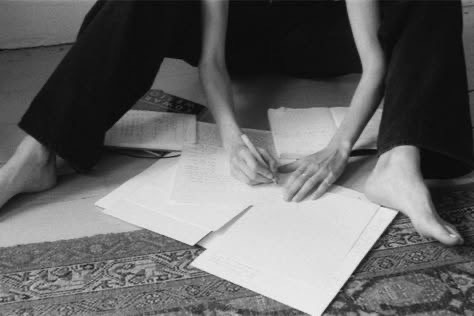
There was a time when communicating with someone who lived far away meant sitting down, taking a piece of paper and putting your thoughts into words. Today, we can send a message in a matter of seconds, receive an answer almost immediately and maintain contact with people wherever they are in the world. Communication has never been so easy, and yet I sometimes wonder whether we have lost something along the way. Why did handwritten letters become so rare? And in a world where we can reach anyone instantly, why does the idea of receiving a letter still feel so special?
The Beauty of Waiting
One of the most fascinating things about letters was the time between writing one and receiving a reply. A letter could take days or even weeks to arrive, and waiting was part of the experience. You had time to wonder whether the other person had received it, what they might think and when they would finally answer. Today, waiting a few hours for a message can sometimes feel frustrating. We have become accustomed to immediate communication, where a notification tells us that someone has read our words and where silence can easily be interpreted as a lack of interest.
Of course, instant communication is incredibly useful. It allows us to maintain relationships across distances, share important news and stay connected throughout the day. But perhaps the speed of communication has also changed our expectations. We are so used to receiving immediate answers that we rarely allow conversations to develop slowly. Letters required patience, and that patience gave each exchange a different rhythm. The time spent waiting was not necessarily wasted; it was part of the connection itself.
Words We Can Keep
A handwritten letter is more than a message. It is also a physical object, something we can hold, fold, put away and rediscover years later. The handwriting, the paper, the ink and even the imperfections make it personal. Unlike a digital message that can disappear among hundreds of conversations, a letter can remain in a drawer for decades, waiting to be found again.
I still write letters for birthdays and special occasions. I have been doing this for a few years, partly because I feel nostalgic for these moments and for the idea of giving someone something that requires a little more time and attention. Writing a letter allows me to slow down and think carefully about what I want to say. Instead of sending a quick birthday message, I can sit down, choose my words and write something that the other person might decide to keep. I like the thought that, years from now, someone could find one of my letters and remember that particular moment in their life.
There is something meaningful about creating an object that carries a personal message beyond the moment in which it was written. A digital message can be just as sincere and important, of course, but a handwritten letter has a different kind of presence. It is a small reminder that someone took the time to think about us, and sometimes that is what makes the difference.
Have We Changed the Way We Communicate?
The disappearance of handwritten letters does not necessarily mean that we have become less capable of expressing affection. We communicate through voice messages, photographs, emails, video calls and countless other forms of digital interaction. We can tell someone we miss them while they are travelling on the other side of the world, and we can celebrate a birthday with friends who live thousands of kilometres away. These are genuine advantages that previous generations did not have.
However, the way we communicate can influence how we express ourselves. Digital conversations often happen while we are doing something else: walking, working, eating or scrolling through social media. We send short messages, use abbreviations and sometimes reply without giving the conversation our full attention. A handwritten letter, on the other hand, usually requires us to stop and dedicate a specific amount of time to another person. It encourages us to organise our thoughts and express feelings that we might otherwise communicate in a hurry.
This does not mean that writing by hand is inherently more sincere than sending a message. A thoughtful text can mean more than a letter written out of obligation. What matters is not the medium itself, but the attention we give to the person receiving our words. Perhaps the real difference is that letters naturally created a space for that attention, whereas today we have to make a conscious effort to protect it.
The Emotional Value of a Letter
Letters can also become connected to particular periods of our lives. Imagine finding a letter written by someone who is no longer part of your everyday life, or reading words you wrote years ago without remembering exactly what you were feeling at the time. Suddenly, the past becomes tangible. You can see how you expressed yourself, what mattered to you and how your relationships have changed. A letter can preserve not only the words of another person, but also a small part of the person you were when you received or wrote it.
Perhaps this is why handwritten letters can feel so nostalgic. They remind us of a slower way of communicating, but they also preserve emotions that might otherwise become difficult to reconstruct. We can look at old photographs and remember what a moment looked like; a letter can help us remember what someone thought, felt or wanted to tell us. It gives us access to a piece of the past that is more intimate than an image alone.
I do not think we need to abandon modern technology to recover this feeling. There is no reason to stop sending messages or to pretend that the past was better in every respect. Instead, perhaps we can bring some of the attention associated with handwritten letters into the way we communicate today. We can write a longer message instead of a hurried reply, send a card for a special occasion or simply take a few minutes to tell someone what they mean to us. These gestures may seem small, but they can make communication feel more personal.
Maybe we did not really stop writing letters because we no longer have anything to say. We stopped because we found faster ways to say it. And while speed has made our lives easier, there is still something valuable about taking our time, choosing our words carefully and leaving someone with something they can return to long after the moment has passed.


Leave a Reply